When designing a double vanity in a bathroom, one of the key aesthetic and functional decisions is the mirror setup. The choice between a single wide mirror double vanity or a double mirror pairing doesn’t just influence style but directly impacts lighting, storage options, and even installation complexity. Homeowners, designers, electricians, and glaziers often debate the merits of each approach, and recent insights from industry leaders like the National Kitchen & Bath Association (NKBA), and practical advice from brands such as Golden Lighting and Lumens can help clarify the best route.
In this post, I’ll walk through the critical considerations around mirror types, sizing rules, placement heights, sconce spacing, and task vs ambient lighting. Also, I’ll offer practical roles for the glazier and electrician, whose coordination is vital in these installations.
Mirror Types: Functional Decisions Beyond Shape
Many people start by picking between oval, round, or rectangular mirrors — but the decision should go deeper than shape. Mirrors over a double vanity serve multiple functions:
- Reflection and Task Lighting: A mirror is where grooming, makeup, and shaving happen. Storage Integration: Medicine cabinets or mirrored storage provide extra function. Lighting Mounting: Mirrors might be backlit, front-lit, or paired with sconces or overhead fixtures. Mounting Mechanics: Frameless, framed, or LED-edge-lit mirrors require different mounting and finishing techniques, important for humidity resistance.
For example, a single wide mirror double vanity often comes frameless or with a thin frame, providing an expansive reflective surface but limited storage behind it. Conversely, a double mirror pairing using two smaller mirrors, especially if medicine cabinets, allows for storage but can fragment visual unity.
There’s also the critical distinction between backlit LED mirrors that illuminate the face evenly without shadows, versus front-lit mirrors dependent on external sconces. Marketers sometimes hide this nuance — don’t be fooled! Backlit mirrors require hardwired electrical feeds coordinated by your electrician before glazier templating.
Storage Considerations
If your project requires storage, double mirrors are https://tessatopmaid.com/recessed-medicine-cabinet-install-what-can-go-wrong-in-the-wall/ usually better at incorporating medicine cabinets. Single wide mirrors can be made with flat or hinged panels, but custom cabinetry usually wins out here. This also affects humidity performance — any cabinetry or frames require sealed edges to avoid failure.
Mounting and Durability
From my 12 years of residential remodel documentation, I always caution on mirror failure in high humidity. Cheap frames warp; unsealed edges delaminate; poor fan performance worsens problems. When working with a glazier for plate glass mirrors, specify fully sealed edges, and check if your mirror includes a demister pad feature to prevent fogging — a worthwhile investment for single wide mirrors.
Sizing Rules and Lighting Layout for Double Vanities
Mirror size is a measurable and measurable first step to a successful installation — but only if you pair it wisely with lighting layout. Sizing affects the available width for sconces and ultimately the lighting quality at the face.
Mirror Style Recommended Width Sconce Placement Common Issues Single Wide Mirror Between 66% and 75% of vanity countertop width (e.g., 48" vanity = 32" to 36" mirror) Wall sconces mounted ~28" above vanity counter, spacing sconces 24"-36" apart Oversizing mirror reduces space for sconces, reduces quality of task lighting Double Mirrors Pairing Each mirror ~20" to 24" wide, spaced to allow a center sconce or space between If center sconce planned, mirrors should be placed with at least 6"-8" gap Too narrow mirrors can feel fragmented; overlapping sconces leads to poor lightingPro Tip: The NKBA standards recommend sconce heights at about 65-70" above finished floor, centered to the mirror edges, and spaced so light hits the face without causing shadows. This timing always makes lighting determination the first step—before deciding mirror width.
Center Sconce Between Mirrors
When you choose a double mirror pairing, you have a unique opportunity: a center sconce between mirrors. This sconce can provide a common ambient glow in the middle while each mirror gets direct task lighting from individual sconces. It can open the visual field and prevent the vanity wall from feeling crowded.
For electricians, configuring the wiring box for a center sconce and separate flanking sconces requires added feeds and jumper wiring. Early coordination with electricians is crucial to plan for switch locations and avoid retrofit headaches.
Placement Heights and Managing Sconce Space
Another frequently ignored detail is the vertical dimension. Sconces need to be mounted with clearances:
- Usually 60-72 inches above finished floor; Between 28-36 inches above countertop height; Centered horizontally with mirror edges or broken into a balance with mirror width.
An oversized mirror often crowds or forces sconces awkwardly higher or closer to edges. This hurts both function and aesthetics. The spacing between sconces should enable enough light along the sides of faces — good for makeup or shaving activities.
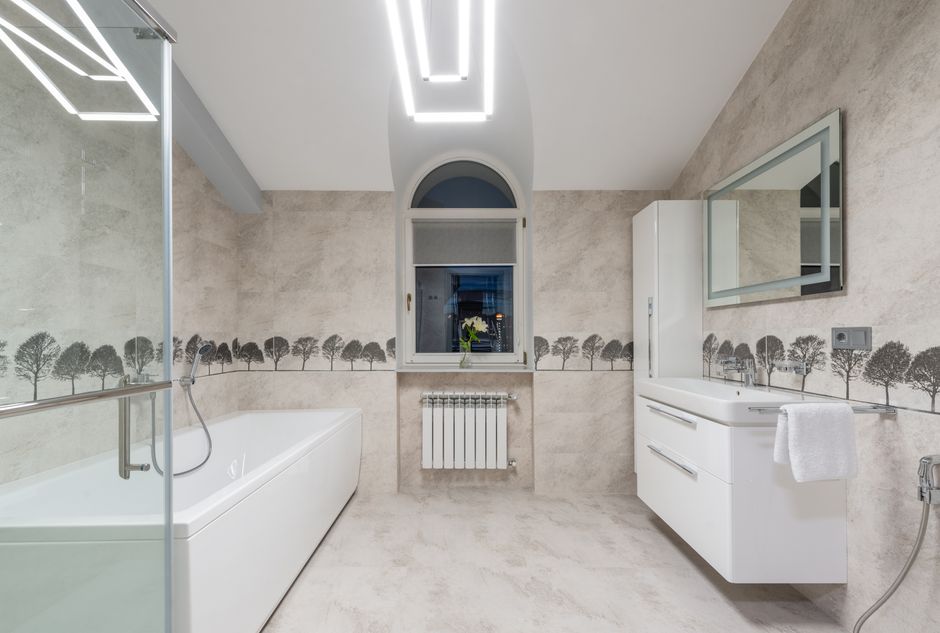
Additionally, be wary of “trend-chasing” oversized round or oval mirrors that occupy too much width and don’t incorporate sconces appropriately. My advice: prioritize task lighting needs over trendy shapes.
Task Lighting vs Ambient Lighting
Lighting design in bathrooms hinges on differentiating task lighting — bright, direct illumination for personal grooming — from ambient lighting — softer, even light that helps overall space illumination.
A common error is undersizing sconces or relying only on overhead ambient lighting, which casts unflattering shadows on the face. The single wide mirror double vanity setup can use either continuous LED backlighting, or sconces flanked on each side. The latter is often preferred for balanced facial illumination.
With a double mirror pairing, sconces are typically mounted on the sides of each mirror. A center sconce can add ambient balance but is optional. Always check lumen output — you want at least 1500-2500 lumens per mirror https://discountcleaners.net/is-a-rectangular-mirror-always-the-safest-choice-if-i-have-not-picked-lighting-yet/ zone with CRI >90 for excellent color accuracy, especially critical for makeup.
Collaborating with Your Glazier and Electrician
The Role of the Glazier
Once mirror sizes and styles are chosen, a professional glazier will template and fabricate the plate glass or mirrored panels. This includes specifying thickness, edge treatments, drilling for wall mounts or cut-outs for lighting components. They also handle installation and sealing—crucial to avoid humidity failures.
Coordinate the glazier’s work schedule with the electrician’s installation of hardwired LED mirrors or feeds for sconces to avoid delays or damage to finished surfaces.
The Electrician’s Responsibilities
Electricians provide and install:

Early consultation with your electrician ensures you get electrical boxes installed at the correct height and location to match mirror layout and sconce spacing. Changes after drywall or tile installation are costly and frustrating.
Summary / Verdict
Option Pros Cons Best For Single Wide Mirror Double Vanity- Expansive clean look Easy to hardwire backlit LED mirrors One seamless reflective surface
- Limited behind-the-mirror storage Must size for sconces carefully
- Allows modular storage options Can include center sconce for ambient fill Classic symmetry
- More complex electrical layout Potential visual fragmentation if not sized properly
My personal quirk: I always decide on lighting first—figure out your sconce or LED mirror wattage, sitelines, and feed locations, then size your mirror. This prevents oversized mirrors crowding sconces or lighting shadows.
In summary, the decision between one big mirror or two over a double vanity is driven by your functional needs, style preference, and precise lighting plans. Consult with your glazier and electrician early, adhere to NKBA spacing guidelines, and leverage brands like Golden Lighting and Lumens for quality fixtures. The right choices will ensure a beautiful, functional bathroom that stands the test of time and humidity.